
Credit Risk Analysis: Predict If A Credit Card Holder Will Pay Dues On Time Using Terno AI
Overview
Credit card companies need to decide whether to approve credit card requests from a new customer. But since doing a hard check affects the credit score of the customer, they are not willing to do that. We aim to build a predictive model using Terno AI that determines whether the customer will pay dues on time. Using this model, the organization can decide whether to approve a credit card request **without **affecting the customer’s credit score. Check out the prompts used for this study here.
Table of Contents
Overview
Dataset
Objective
Terno AI
Our Approach: From Data to Decisions
Insights & Findings by Terno AI
Key Predictive Factors
Recommendations by Terno AI
Conclusion
Dataset
We chose the dataset below that fits our criteria from Kaggle.
Objective
To identify **risk customer** profilesTo predict if a credit card holder will default on their credit
Terno AI
Terno AI is a secure, conversational AI-powered data scientist that enables quick and precise insights through natural language, customized to your data. It’s an effective solution for saving our time and valuable resources. Terno AI builds an end-to-end pipeline from data cleaning to model generation just by taking simple prompts as input. It’s a **game-changer **in the field of data science.
Our Approach: From Data to Decisions
Finding Dataset
Data Cleaning & Pre-processing
Exploratory Data Analysis
Prediction Model
Evaluation
We asked Terno AI to generate insights and build a pipeline for our use case by using the following prompt:
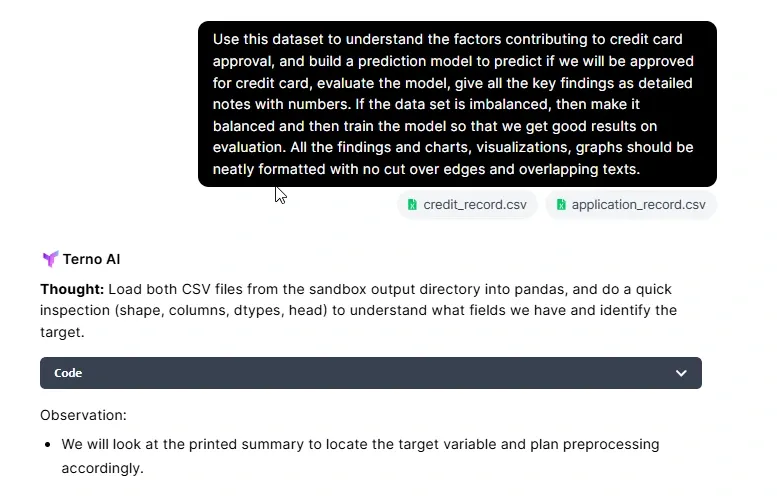
Prompt: Use this dataset to understand the factors contributing to credit card approval, and build a prediction model to predict if we will be approved for credit card, evaluate the model, give all the key findings as detailed notes with numbers. If the data set is imbalanced, then make it balanced and then train the model so that we get good results on evaluation. All the findings and charts, visualizations, graphs should be neatly formatted with no cut over edges and overlapping texts.
Terno Response: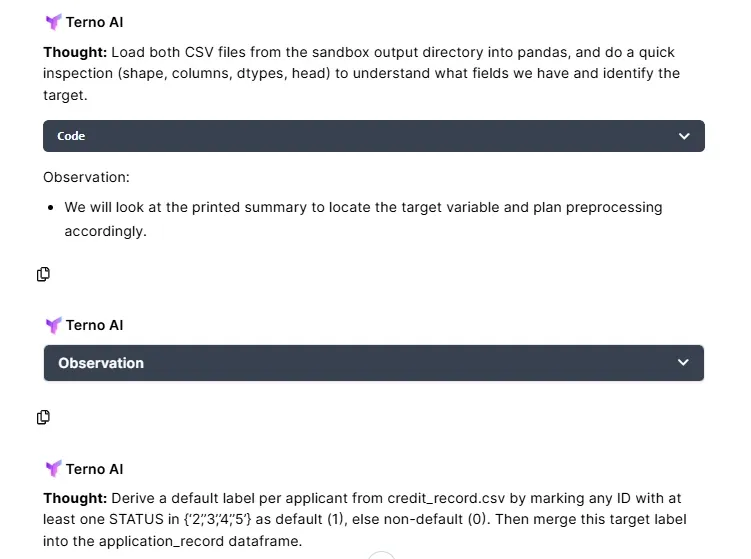
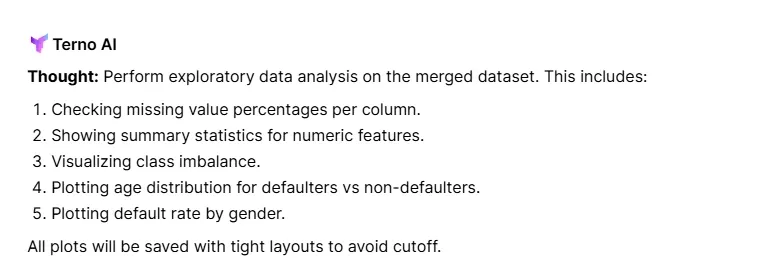
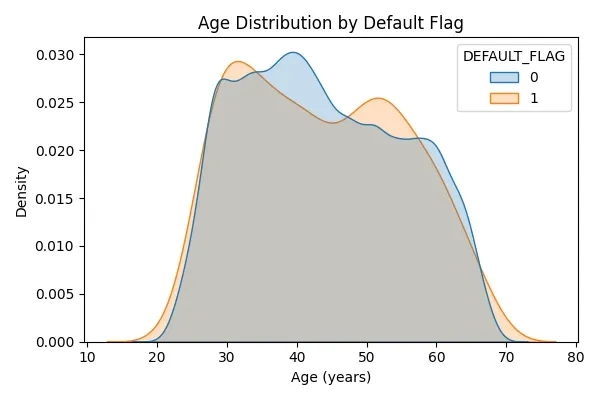
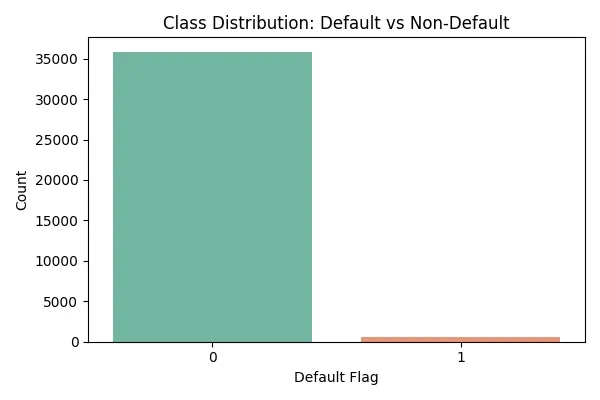
Next, we evaluate the models and compare the efficiency of the two models.
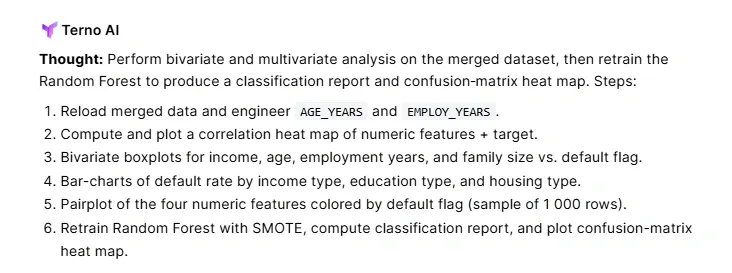
**Prompt: **Please do bivariate and multivariate analysis of the same, i also need classification report, heat map

Terno Response:
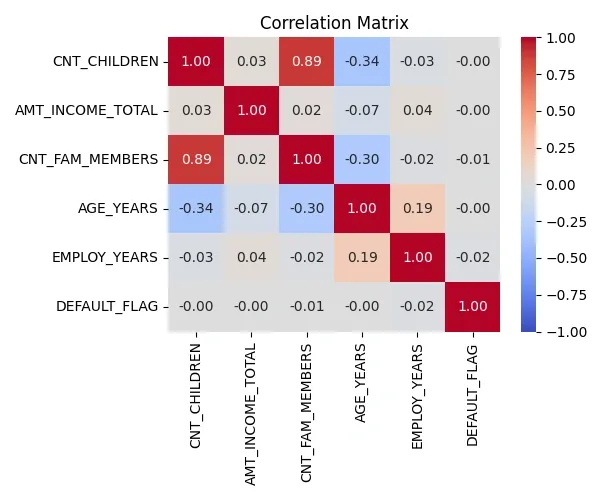
Correlation Matrix
Classification Report
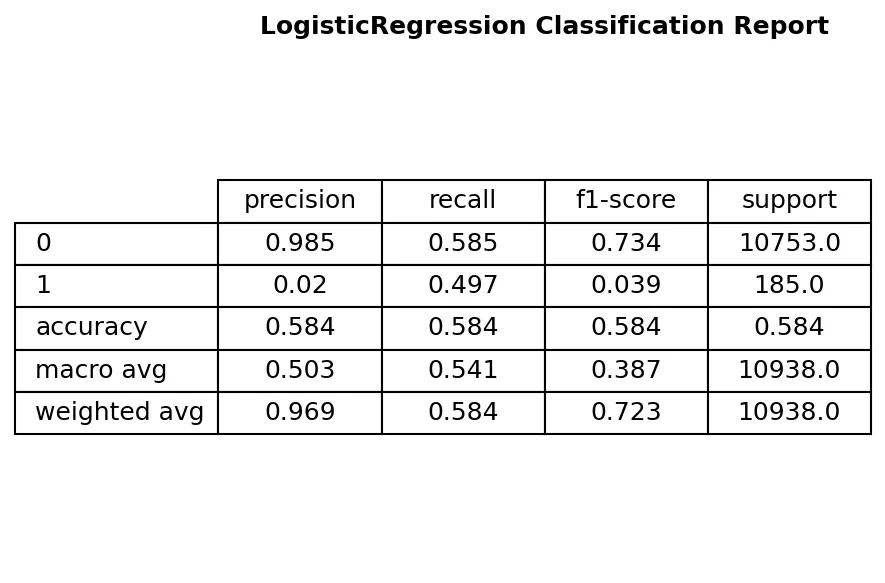
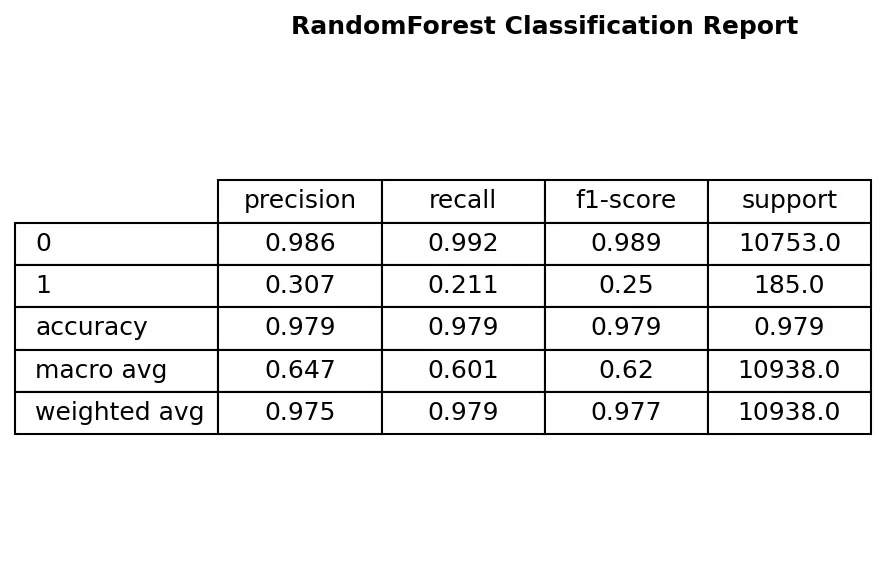
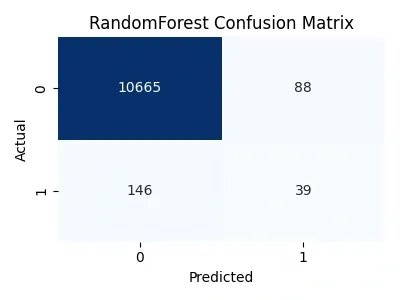
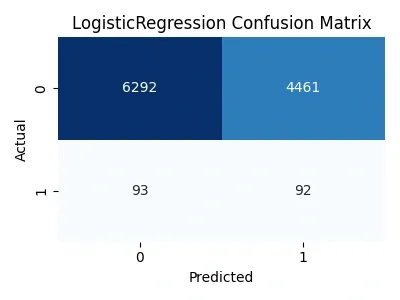
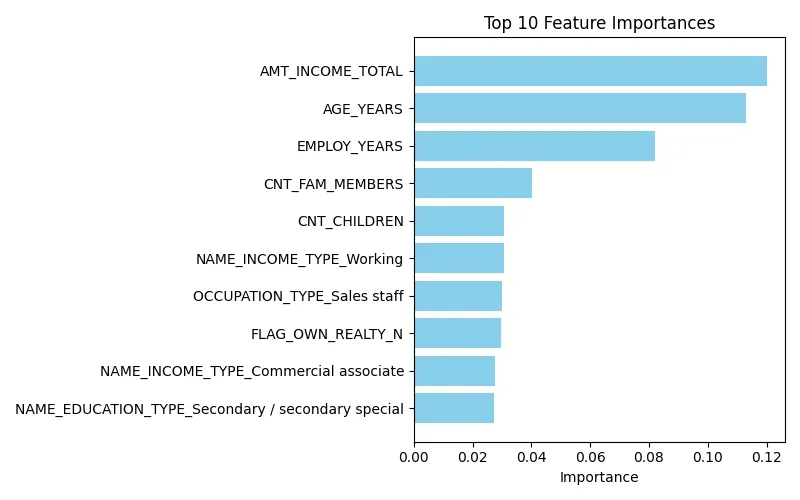
Feature Importance
Insights & Findings by Terno AI
What the Data Says About Credit Defaults
When we set out to explore credit risk, we had two big datasets in hand: one with over 438,000 applicant profiles and another with more than a million monthly balance records. After merging them, we focused on applicants who had ever shown signs of trouble (statuses 2, 3, 4, or 5). That left us with 36,457 people—but only 616 of them were defaulters. Just 1.69%, a tiny fraction, which already hinted at how tough this prediction problem would be.
Cleaning the data brought its own surprises. About a third of applicants hadn’t shared their occupation, so we grouped them under “Unknown.” A few had impossible values in employment days—positive numbers when they should’ve been negative—so we fixed those using the median.
Looking closer, some patterns stood out:
The typical income was around $135,000, and most households had two members.
The median age was 44 years, but those who defaulted tended to be younger—closer to 40 on average.
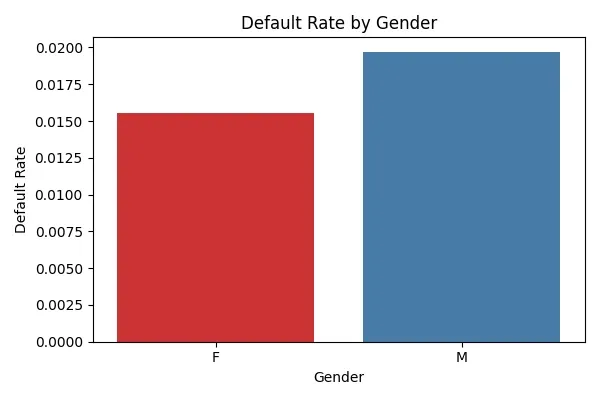
Even gender showed a subtle difference: men defaulted slightly more often (1.8%) than women (1.6%).
Small differences, but together they start painting a picture of who might be at risk.
Key Predictive Factors
When we examined the data, certain patterns became very clear — specific traits consistently indicated whether someone was more likely to default or not.
Higher risk of default
Younger applicants: Individuals at the beginning of their financial journey often exhibit higher risk, likely due to a limited credit history and less financial stability.
Fewer years employed: A short work history can mean income is less predictable, which increases risk.
Lower total income: With less income to rely on, even small financial setbacks can make repayment difficult.
Lower risk of default
Stable, long-term employment: A steady career builds confidence in repayment ability.
Owning real estate: Property ownership often reflects stronger financial stability and responsibility.
Higher income brackets: More income not only eases repayment but also signals stronger financial health overall.
Together, these factors gave us a reliable foundation for predicting who is more likely to default and who is a safer bet for approval.
Recommendations by Terno AI
Based on these insights, Terno AI suggested some simple but powerful rules:
Age and work history matter. Both should be considered in loan approval decisions.
Steady careers pay off. If someone has worked for 10+ years and earns over $200,000, their approval chances are much stronger.
Trust the model. If the predicted risk is under 10%, go ahead and approve — this gives about 95% accurate approvals while keeping risk low.
Conclusion
In this use case, we built a predictive model to assess credit card default risk — all without affecting credit scores.
What made the process smooth was Terno AI. From cleaning the data and exploring it to building the model and evaluating results, the tool handled it all. Its conversational interface made it easy to uncover key factors, while automated insights turned raw numbers into actionable recommendations. You can see the prompts here.
The takeaway? With Terno AI, we could save time, improve accuracy, and make smarter, data-driven decisions.

10 September 2026
Designing CertusAI: A Compliance-First Enterprise LLM Platform for Regulated Industries
As enterprise adoption pivots from raw model parameter scale to verifiable trust, CertusAI introduces a compliance-first LLM architecture engineered specifically for highly regulated industries. By integrating real-time PII redaction, deterministic policy enforcement, and cryptographically signed audit chains directly into the inference pipeline, CertusAI unlocks agentic AI productivity while ensuring total data sovereignty and statutory compliance.

10 September 2026
E-Commerce Return Intelligence: Analyzing Return Drivers and Predicting Purchase-Time Return
Addressing reverse-logistics friction and return-rate costs in fashion e-commerce, this study leverages the 1.37M-record ASOS GraphReturns dataset to evaluate product, pricing, and country-level return drivers. Using Terno AI for structured analysis alongside a deployed Logistic Regression baseline, the platform provides purchase-time risk scoring to power relative risk ranking, operational prioritization, and non-punitive intervention pilots.
10 September 2026
Global Food Loss Intelligence: Strategic Screening & Decision Framework
An executive decision-support whitepaper translating the official FAO Food Loss Index (SDG Indicator 12.3.1a) into actionable intelligence for 2021–2023. This study establishes a data-driven monitoring baseline across major commodity groups, identifying Fruits & Vegetables (3-year mean index of 109.65) as the primary priority for diagnostic follow-up while offering structured strategies for public policy, industry benchmarking, and evidence-based resource allocation.