Introduction
Electrical power distribution networks depend heavily on transformer reliability. Distribution transformers step down voltage levels and serve as a key link between the transmission network and end consumers. Any transformer malfunction can disrupt power supply to households, industries, commercial buildings, agricultural systems, and public infrastructure.
Transformer failures are generally caused by thermal stress, insulation degradation, oil leakage, overloading, voltage irregularities, mechanical vibration, environmental stress, and poor maintenance. In many regions, transformer health is still monitored manually through scheduled inspections. Such inspections may include temperature checks, oil-level verification, load testing, or visual examination. However, these checks are periodic and may miss sudden changes in transformer condition.
Modern utilities increasingly require predictive maintenance solutions. Predictive maintenance uses real-time sensing and analytical models to estimate equipment condition and forecast faults before failure occurs. However, many commercial transformer monitoring systems are costly, cloud-dependent, and difficult to retrofit into existing low-cost distribution infrastructure.
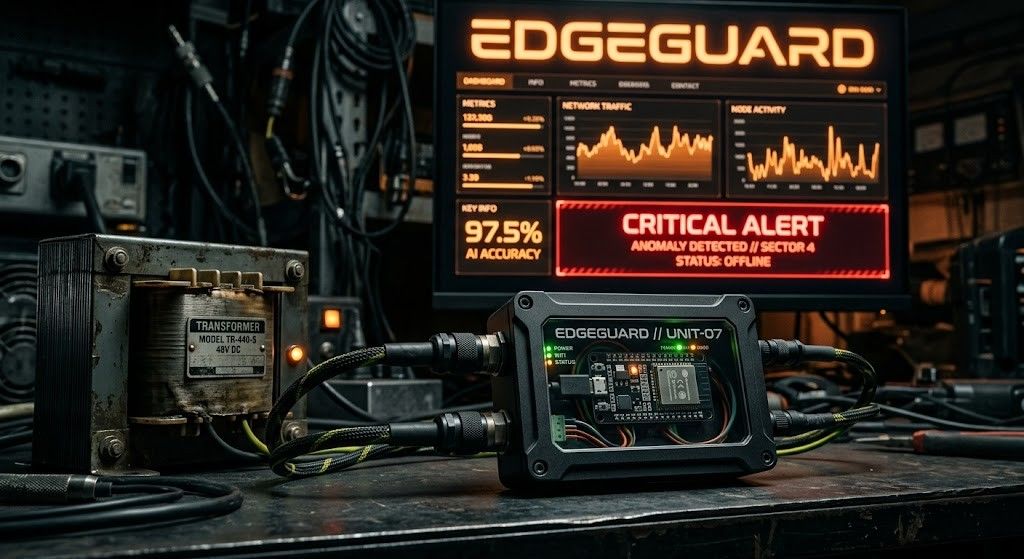
EdgeGuard addresses this gap by offering a compact, affordable, and intelligent edge-computing system. It is designed to be installed on existing transformers without replacing the transformer or requiring expensive supervisory systems. The system uses multiple sensor inputs and artificial intelligence to identify early fault patterns and trigger preventive actions.
Problem Statement
Conventional transformer maintenance suffers from several limitations:
1. Periodic manual inspection is not continuous
Faults may develop between inspection cycles and remain undetected.
2. Run-to-failure maintenance is costly
Waiting until a transformer fails can lead to permanent equipment damage, power outages, and expensive replacement.
3. Commercial monitoring systems are expensive
Advanced online transformer monitoring solutions are often unsuitable for small-scale distribution transformers due to high deployment cost.
4. Cloud-based systems depend on internet connectivity
Rural and remote substations may not have reliable connectivity, making cloud-only monitoring unreliable.
5. Human response time may be slow
Even when a warning is detected, manual intervention may not occur quickly enough to prevent damage.
6. Security risks exist in connected systems
Unauthorized commands or fake telemetry injection can lead to incorrect diagnosis or malicious tripping.
EdgeGuard is designed to solve these problems by combining low-cost sensing, AI-based fault prediction, secure communication, local decision-making, and autonomous hardware protection.
Objectives of the Project
The major objectives of EdgeGuard are:
- To continuously monitor transformer health using multiple physical and electrical parameters.
- To detect early signs of transformer faults using AI-based prediction.
- To reduce dependency on manual inspection and periodic maintenance.
- To provide real-time alerts and visual diagnostics through a web dashboard.
- To automatically isolate the transformer during critical risk conditions.
- To ensure cloud-independent operation for faster and more reliable response.
- To provide secure communication between hardware and backend systems.
- To design a low-cost retrofittable system suitable for practical field deployment.
System Architecture
EdgeGuard follows a four-layer architecture that integrates hardware sensing, embedded control, machine learning inference, and dashboard-based supervision.
The high-level architecture is:
Sensors → ESP32 Node → API Key Security → Neural AI Core → Relay / Dashboard
5.1 Physical Sensing Layer
The sensing layer collects real-time information from the transformer and its surrounding environment. Six key parameters are monitored:
Temperature Monitoring
The DS18B20 temperature sensor measures the thermal condition of the transformer. High temperature may indicate overload, insulation stress, cooling failure, or internal winding issues.
Humidity Monitoring
The DHT22 sensor measures ambient relative humidity. High humidity can increase insulation degradation risk, corrosion, and moisture-related faults.
Vibration Monitoring
The MPU6050 accelerometer detects micro-vibrations. Abnormal vibration may suggest core looseness, mechanical instability, winding movement, or mounting issues.
Oil-Level Monitoring
A digital float switch is used to detect oil-level reduction. Low oil level may indicate leakage, poor cooling, or insulation risk.
Current Monitoring
The ACS712 current sensor measures transformer load current. Excessive current may indicate overloading or abnormal load behavior.
Voltage Monitoring
The ZMPT101B voltage sensor monitors voltage conditions. Abnormal voltage can contribute to stress, heating, and unstable operation.
Signal Normalization and AI Risk Calculation
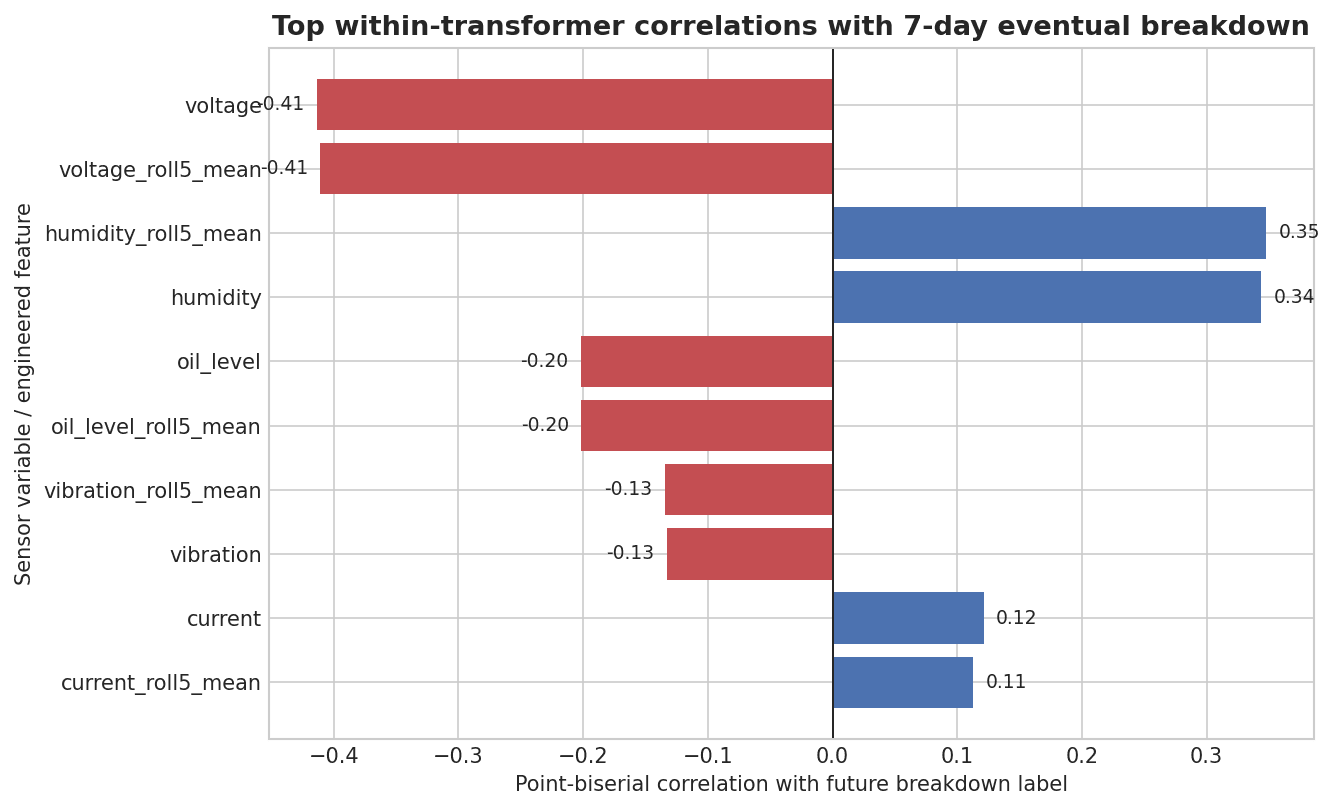
Raw sensor outputs are not directly suitable for neural network processing because different sensors produce values in different ranges and units. For example, temperature is measured in degrees Celsius, humidity in percentage, current in amperes, voltage in volts, and vibration in acceleration values.
To solve this problem, EdgeGuard normalizes raw sensor values into a standard numerical range between 0.0 and 1.0. This creates a uniform feature vector for AI processing.
A typical input vector may be represented as:
[ X = [T_n, H_n, VIB_n, OIL_n, I_n, V_n] ]
Where:
(T_n) = normalized temperature
(H_n) = normalized humidity
(VIB_n) = normalized vibration
(OIL_n) = normalized oil-level status
(I_n) = normalized current
(V_n) = normalized voltage
This vector is then passed into a Multi-Layer Perceptron neural network.
By transitioning from reactive repairs to predictive maintenance, EdgeGuard enables grid operators to proactively identify electrical anomalies, significantly reducing the risk of catastrophic transformer failures and minimizing operational downtime.
#### Neural Network-Based Fault Detection
The AI core of EdgeGuard is based on an MLP neural network. An MLP is a feed-forward neural network consisting of an input layer, one or more hidden layers, and an output layer. It is suitable for pattern recognition and classification problems where multiple input parameters jointly determine system condition.
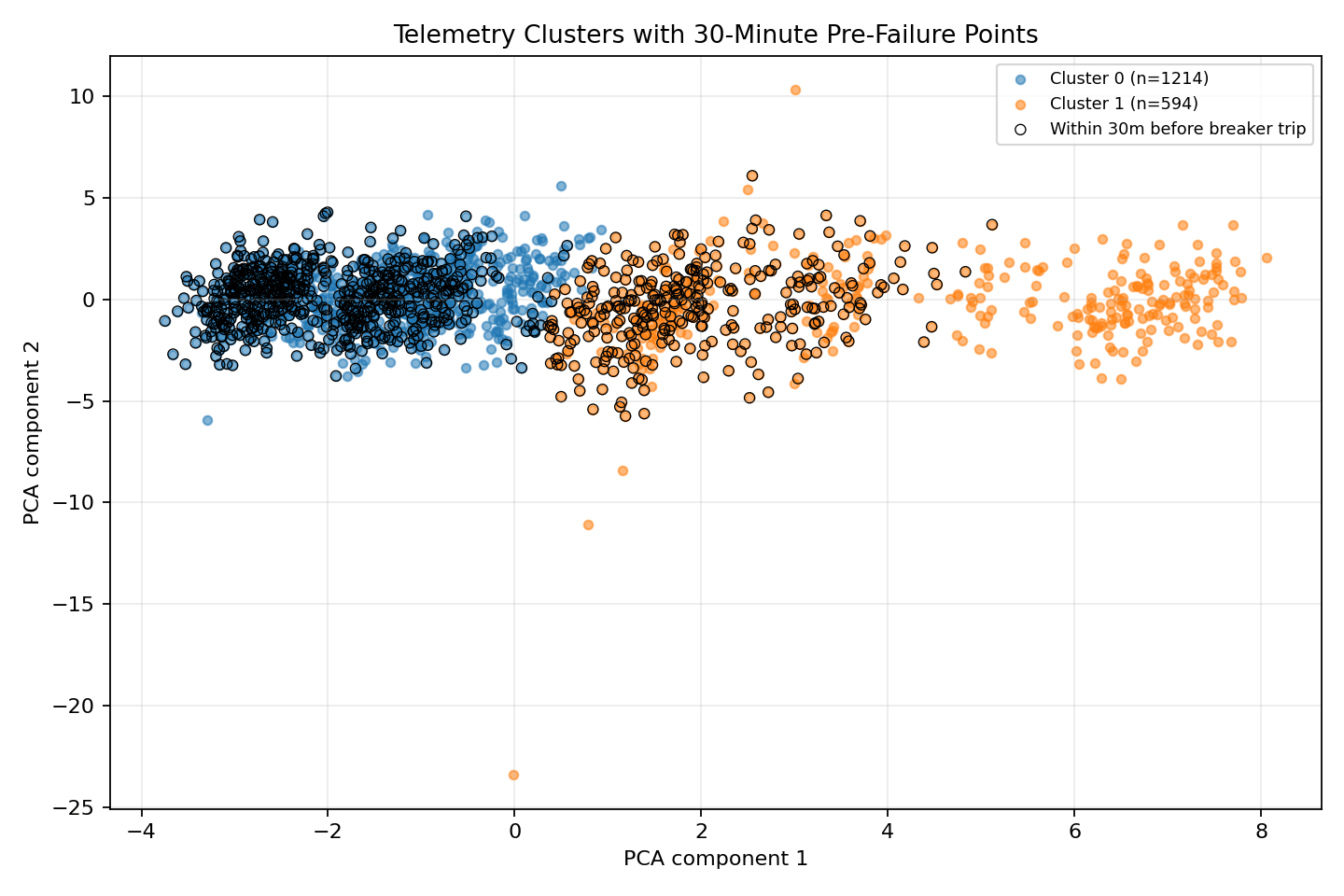
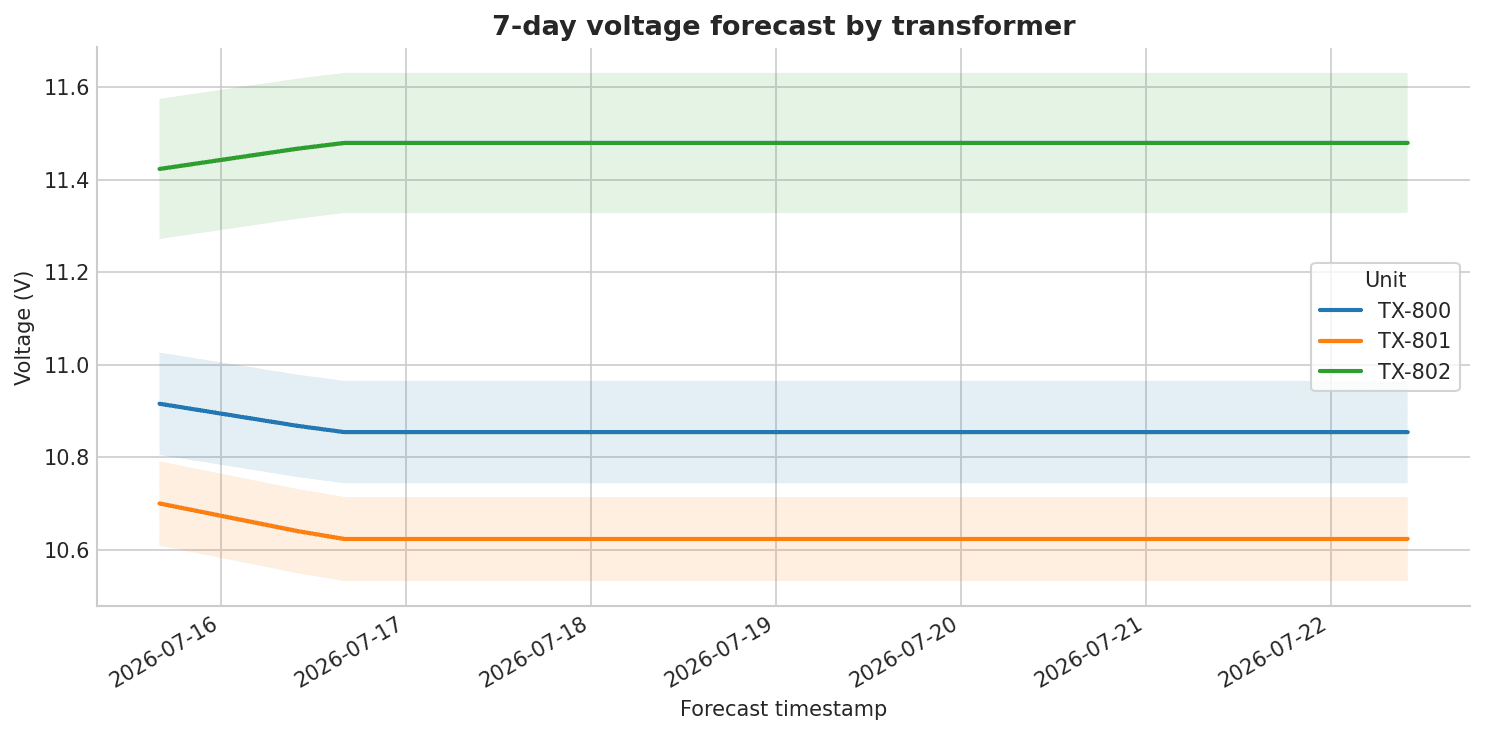
In EdgeGuard, the MLP analyzes sensor patterns and generates a risk score. The risk score represents the probability or severity of transformer failure conditions.
Fault Pattern Recognition
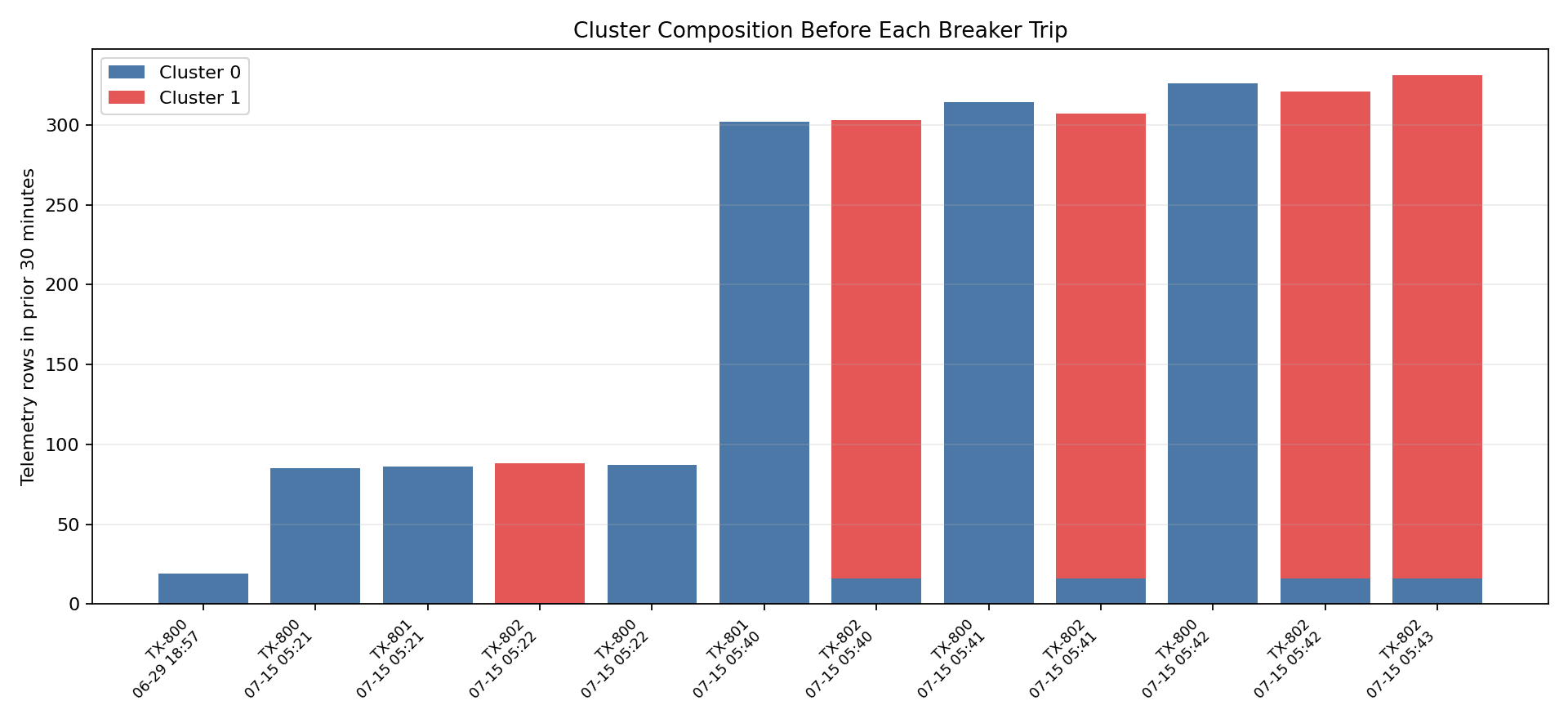
The system distinguishes between multiple operating states:
Healthy State
When temperature, vibration, current, voltage, oil level, and humidity remain within acceptable limits, the transformer is classified as healthy. The risk score is typically less than or equal to 15%.
Overheating or Overload
If temperature and current are both high, the system identifies a possible overload or thermal stress condition. This produces a medium-to-high risk score of approximately 65% to 75%.
Core Looseness or Mechanical Fault
If vibration is high while temperature remains normal, the system identifies a possible mechanical fault, such as core looseness or abnormal structural movement. This condition produces a risk score of approximately 60% to 75%.
Critical Oil Leak or Cooling Breakdown
If oil level is low and temperature is high, the system identifies a critical cooling failure or oil leakage condition. This produces a high-risk score of 85% or above.
Automated Hardware Protection
One of the most important features of EdgeGuard is its ability to take autonomous protection action. Instead of only sending alerts to operators, the system can directly control a relay connected to the circuit breaker.
When the AI risk score exceeds the predefined critical threshold of 80%, the ESP32 sends a high logic signal to GPIO 26. This activates the relay circuit and trips the breaker to isolate the transformer.
This protection mechanism helps prevent:
-Transformer burning
-Insulation breakdown
-Oil fire risk
-Internal winding damage
-Extended outage duration
-Cascading distribution faults
The system also supports two-way remote override. Authorized operators can send commands from the dashboard to trip or charge the breaker manually. This provides both autonomous and human-supervised control.
Conclusion
EdgeGuard presents a practical and affordable approach to transformer predictive maintenance using edge computing and artificial intelligence. By combining real-time sensor monitoring, neural-network-based risk prediction, autonomous relay control, and secure web-based supervision, the system improves transformer safety and operational reliability.
The project is especially valuable for distribution grids where expensive monitoring systems are difficult to deploy. Its low estimated cost, retrofittable hardware, cloud-independent protection logic, and dashboard-based control make it suitable for smart-grid modernization, rural electrification infrastructure, and preventive maintenance applications.

10 September 2026
Designing CertusAI: A Compliance-First Enterprise LLM Platform for Regulated Industries
As enterprise adoption pivots from raw model parameter scale to verifiable trust, CertusAI introduces a compliance-first LLM architecture engineered specifically for highly regulated industries. By integrating real-time PII redaction, deterministic policy enforcement, and cryptographically signed audit chains directly into the inference pipeline, CertusAI unlocks agentic AI productivity while ensuring total data sovereignty and statutory compliance.
10 September 2026
E-Commerce Return Intelligence: Analyzing Return Drivers and Predicting Purchase-Time Return
Addressing reverse-logistics friction and return-rate costs in fashion e-commerce, this study leverages the 1.37M-record ASOS GraphReturns dataset to evaluate product, pricing, and country-level return drivers. Using Terno AI for structured analysis alongside a deployed Logistic Regression baseline, the platform provides purchase-time risk scoring to power relative risk ranking, operational prioritization, and non-punitive intervention pilots.

10 September 2026
Global Food Loss Intelligence: Strategic Screening & Decision Framework
An executive decision-support whitepaper translating the official FAO Food Loss Index (SDG Indicator 12.3.1a) into actionable intelligence for 2021–2023. This study establishes a data-driven monitoring baseline across major commodity groups, identifying Fruits & Vegetables (3-year mean index of 109.65) as the primary priority for diagnostic follow-up while offering structured strategies for public policy, industry benchmarking, and evidence-based resource allocation.