Building an AI-Powered Trade Intelligence Platform for India: Turning 19 Years of Trade Data into Predictive Economic Intelligence
Author: Ritesh Karki
Introduction
India is one of the world's largest trading economies, importing essential commodities such as crude oil, machinery, electronics, pharmaceuticals, and industrial raw materials while exporting products to more than 250 countries. Every movement in global oil prices, exchange rates, inflation, or international trade policies has a direct impact on India's economy.
Despite the availability of extensive trade data, most analyses remain descriptive. Government reports, dashboards, and spreadsheets explain what has already happened but rarely provide insights into what is likely to happen next.
This project was developed to bridge that gap.
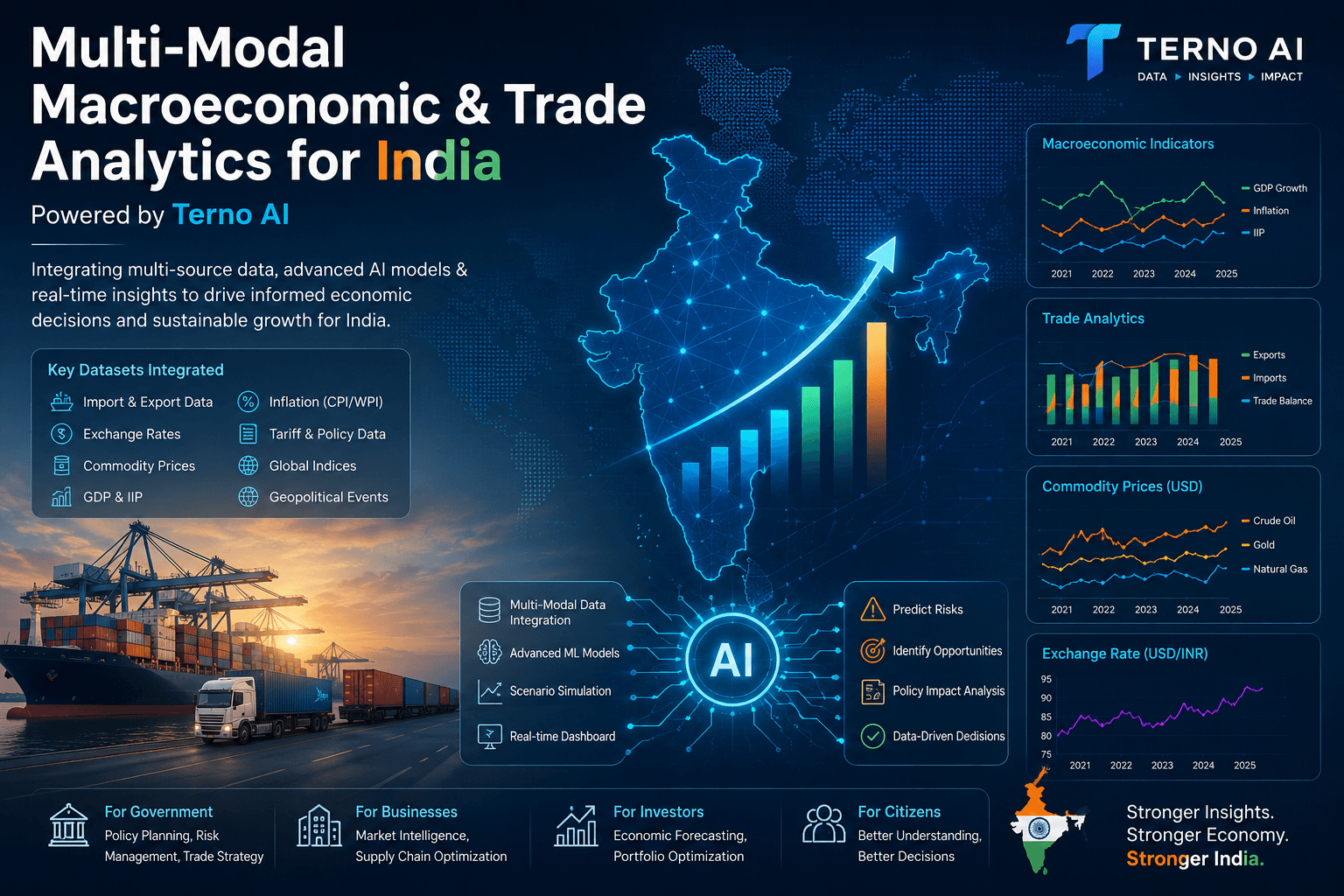
The India Trade Intelligence Platform is an AI-powered analytics system that integrates nineteen years of trade and macroeconomic data into a single predictive platform capable of forecasting trade deficits, identifying structural risks, and supporting evidence-based policy decisions. Rather than simply visualizing historical data, the platform transforms fragmented information into actionable intelligence for governments, businesses, researchers, and investors.
The Business Problem
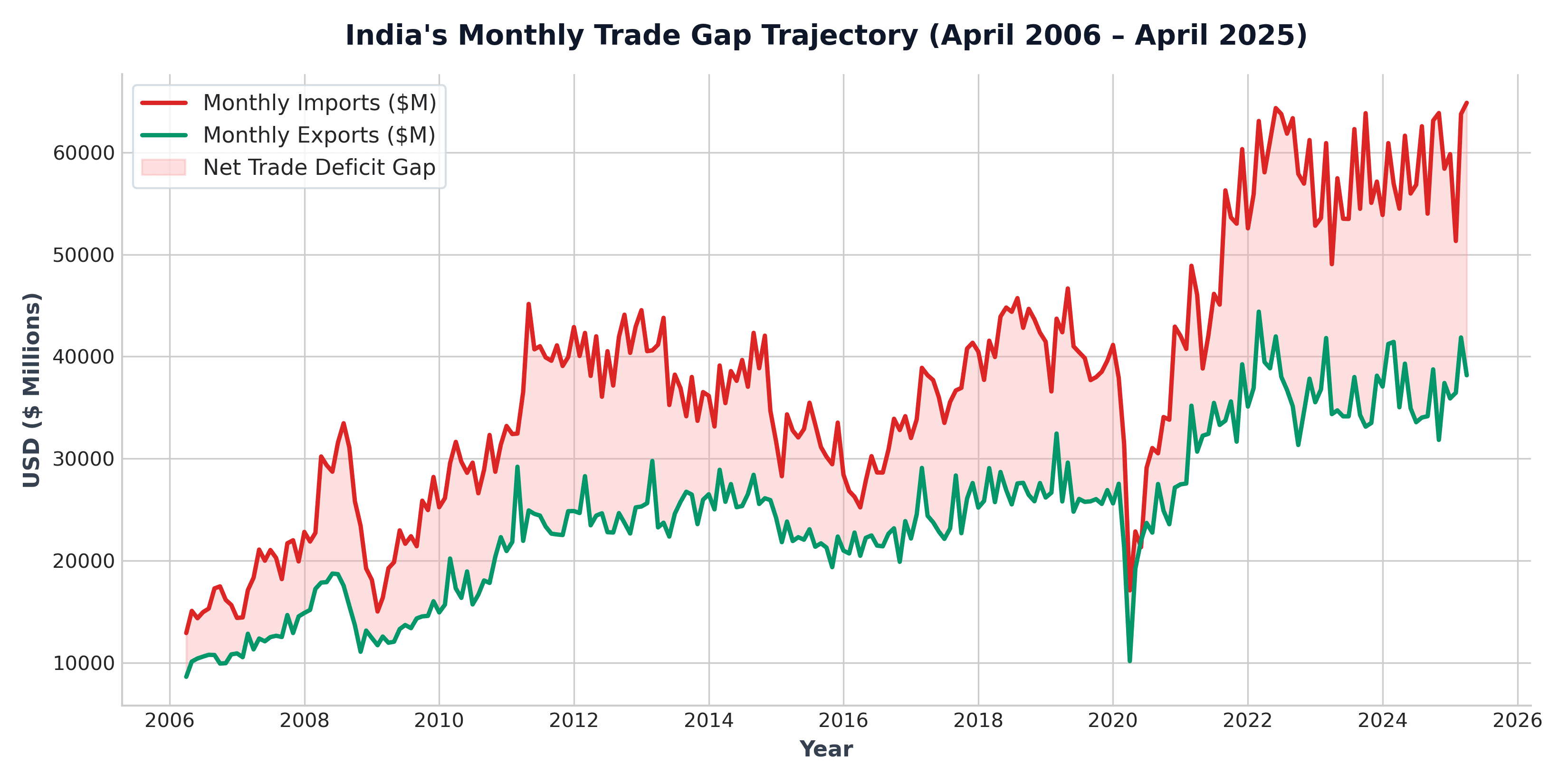
India imports an average of $37.64 billion worth of goods every month while exporting approximately $24.50 billion, resulting in an average structural trade deficit of nearly $13.14 billion per month.
Although these figures are publicly available, they are scattered across multiple sources, including DGCI&S trade databases, Reserve Bank of India exchange rate releases, Brent crude oil reports, World Bank macroeconomic indicators, and tariff schedules. Analysts often spend more time collecting and cleaning data than generating insights.
Even more concerning, the official trade files contain aggregate summary rows alongside country-level records. Without careful preprocessing, these rows cause import values to be counted twice, leading to significant analytical errors.
This project began with a simple objective:
"Can artificial intelligence transform fragmented trade data into a reliable decision-support system capable of forecasting India's future trade performance?"
Building the Data Foundation
Before applying machine learning, the first priority was building a reliable analytical dataset.
The platform integrates over 104,000 trade records covering the period from April 2006 to April 2025, combining:
Monthly Import Data
Monthly Export Data
USD/INR Exchange Rate
Brent Crude Oil Prices
GDP
CPI Inflation
Tariff Rates
Each dataset required extensive preprocessing. Date formats were standardized, measurement units were aligned, missing values were handled, duplicate records were removed, and every dataset was merged into a unified monthly time-series database.
One of the most important improvements involved removing duplicate "India Total Import" rows, which reduced the estimated monthly import volume from an incorrect $74.67 billion to the validated baseline of $37.64 billion. This step ensured that all subsequent analyses and predictive models were built on reliable data.
Exploring Nineteen Years of Trade Patterns
With the cleaned dataset in place, exploratory analysis revealed several long-term economic trends.
Imports consistently outpaced exports throughout the study period, resulting in a persistent trade deficit. The analysis also highlighted how external macroeconomic events influenced India's trade performance over time.
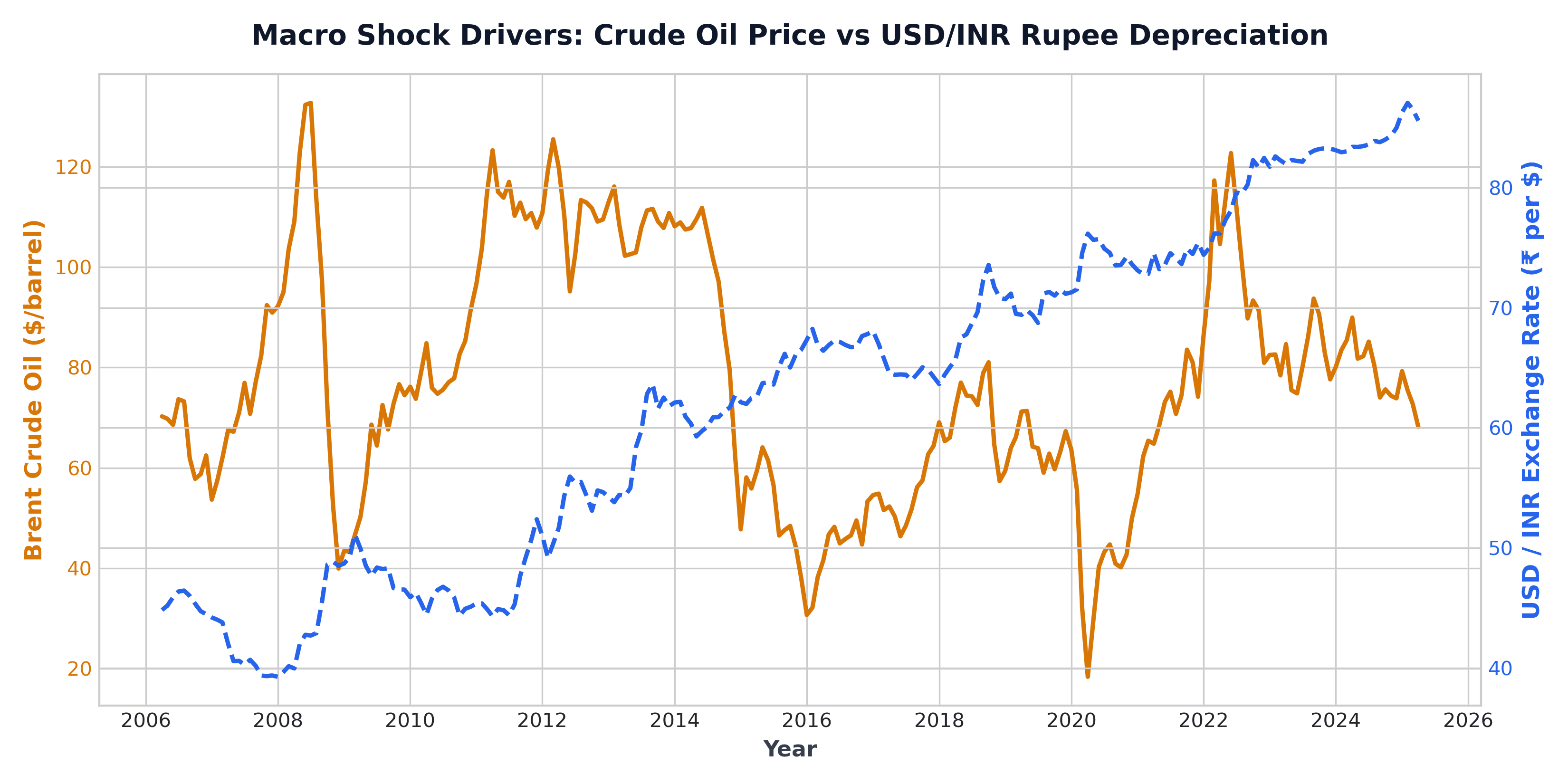
During 2006–2008, crude oil prices surged above $130 per barrel, but the relatively strong Indian Rupee helped moderate the trade deficit.
Between 2012 and 2014, rising oil prices combined with currency depreciation significantly increased import costs.
The period from 2022 to 2025 represented the most challenging phase, as elevated crude oil prices coincided with a historically weak Rupee, producing record trade deficits exceeding $30 billion in certain months.
These findings demonstrated that India's trade performance is influenced not by a single economic variable but by the interaction of energy markets, exchange rates, inflation, and global demand.
Understanding India's Trade Dependencies
Trade concentration analysis provided another important perspective.
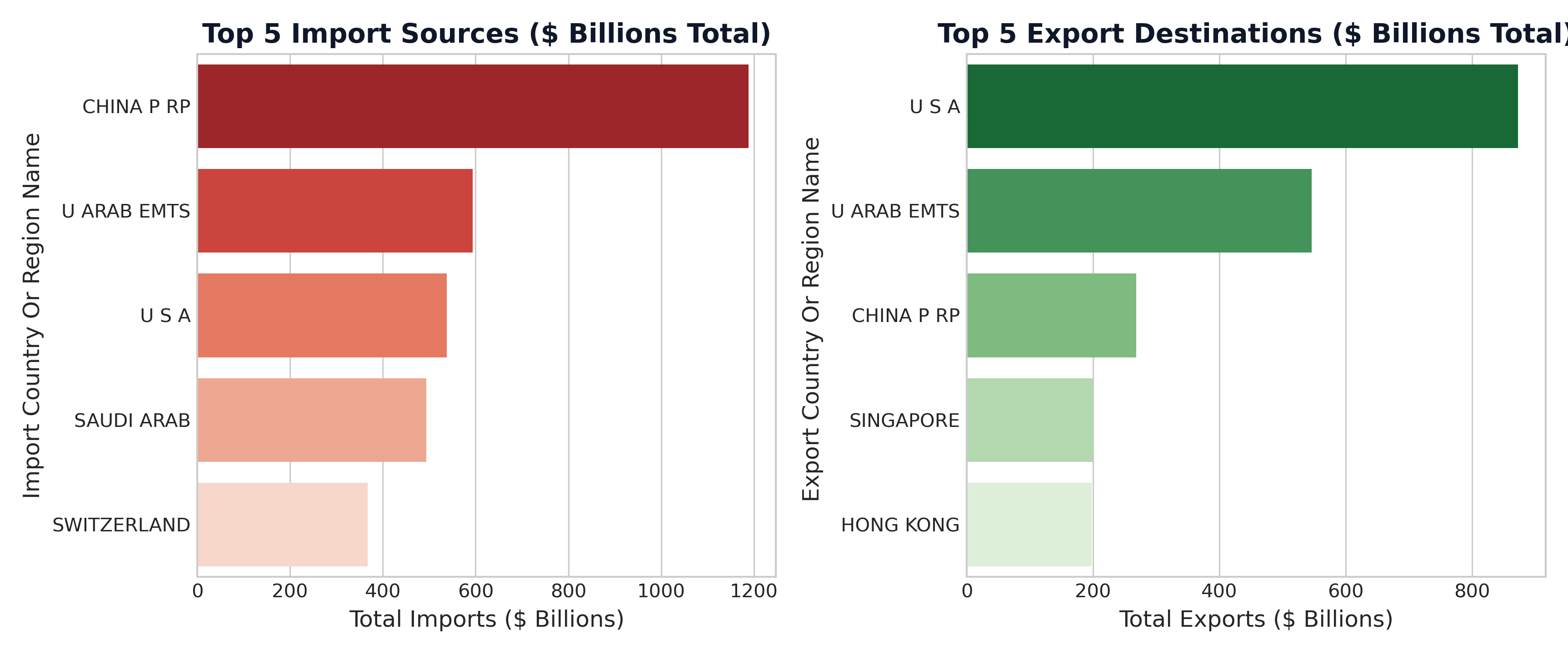
The study identified China, the United Arab Emirates, the United States, Saudi Arabia, and Switzerland as India's largest import partners, while the United States, United Arab Emirates, and China remained the country's leading export destinations.
Although these relationships support economic growth, they also create concentration risks. Heavy dependence on a limited number of countries increases vulnerability to geopolitical conflicts, supply-chain disruptions, and commodity price shocks.
Understanding these dependencies enables policymakers and businesses to evaluate diversification strategies and strengthen economic resilience.
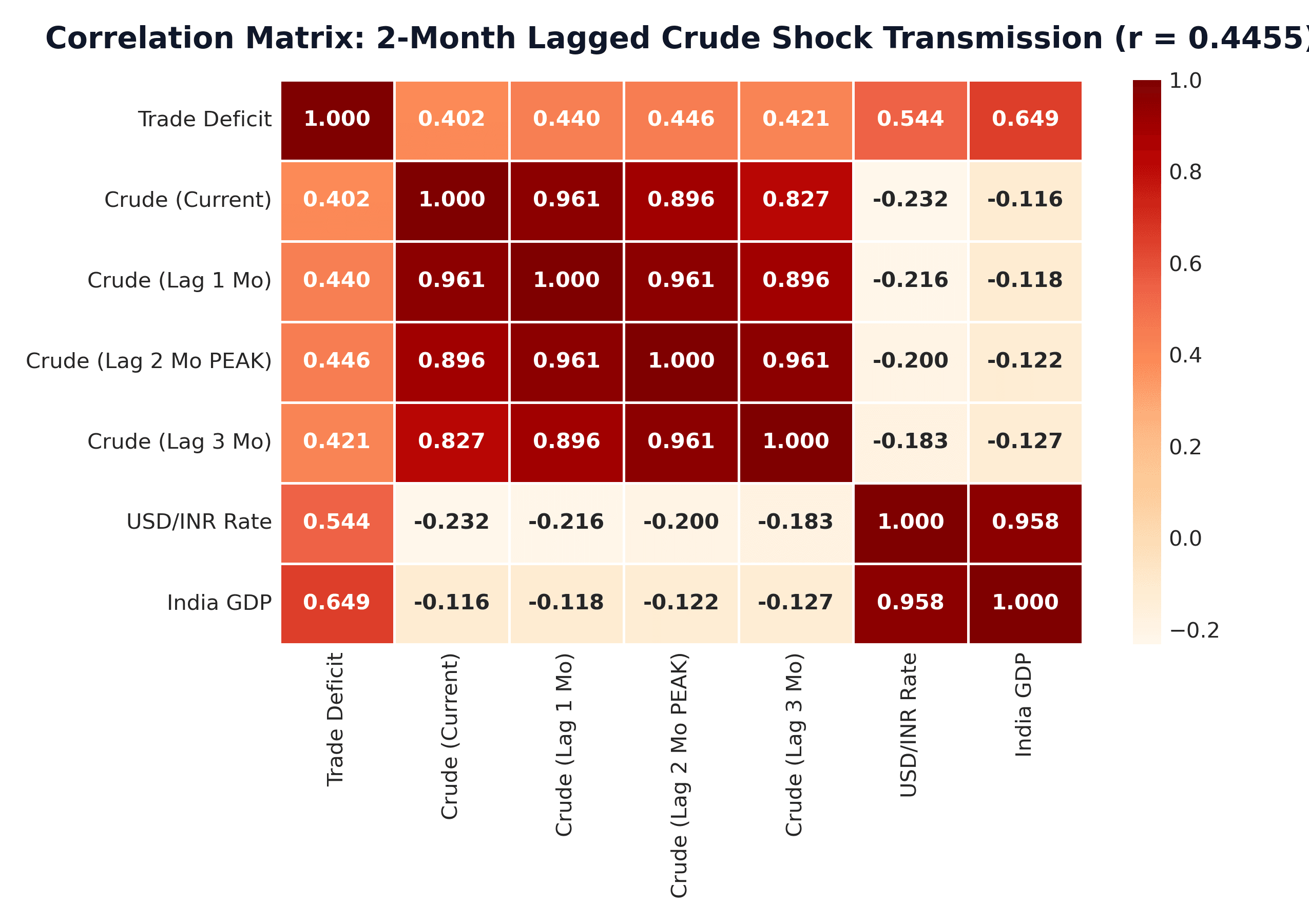
A Key Discovery: The Two-Month Crude Oil Transmission Lag
One of the most significant outcomes of the project emerged during diagnostic analysis.
Instead of affecting India's trade balance immediately, global crude oil price increases showed their strongest relationship with the trade deficit approximately two months later.
This delay reflects the realities of international commerce. Shipping schedules, customs clearance, invoicing cycles, and commercial credit terms create a natural gap between fluctuations in global energy markets and their appearance in India's import statistics.
Recognizing this two-month transmission window provides an opportunity for governments and businesses to anticipate future economic pressures rather than responding only after they materialize.
Building the Predictive Engine
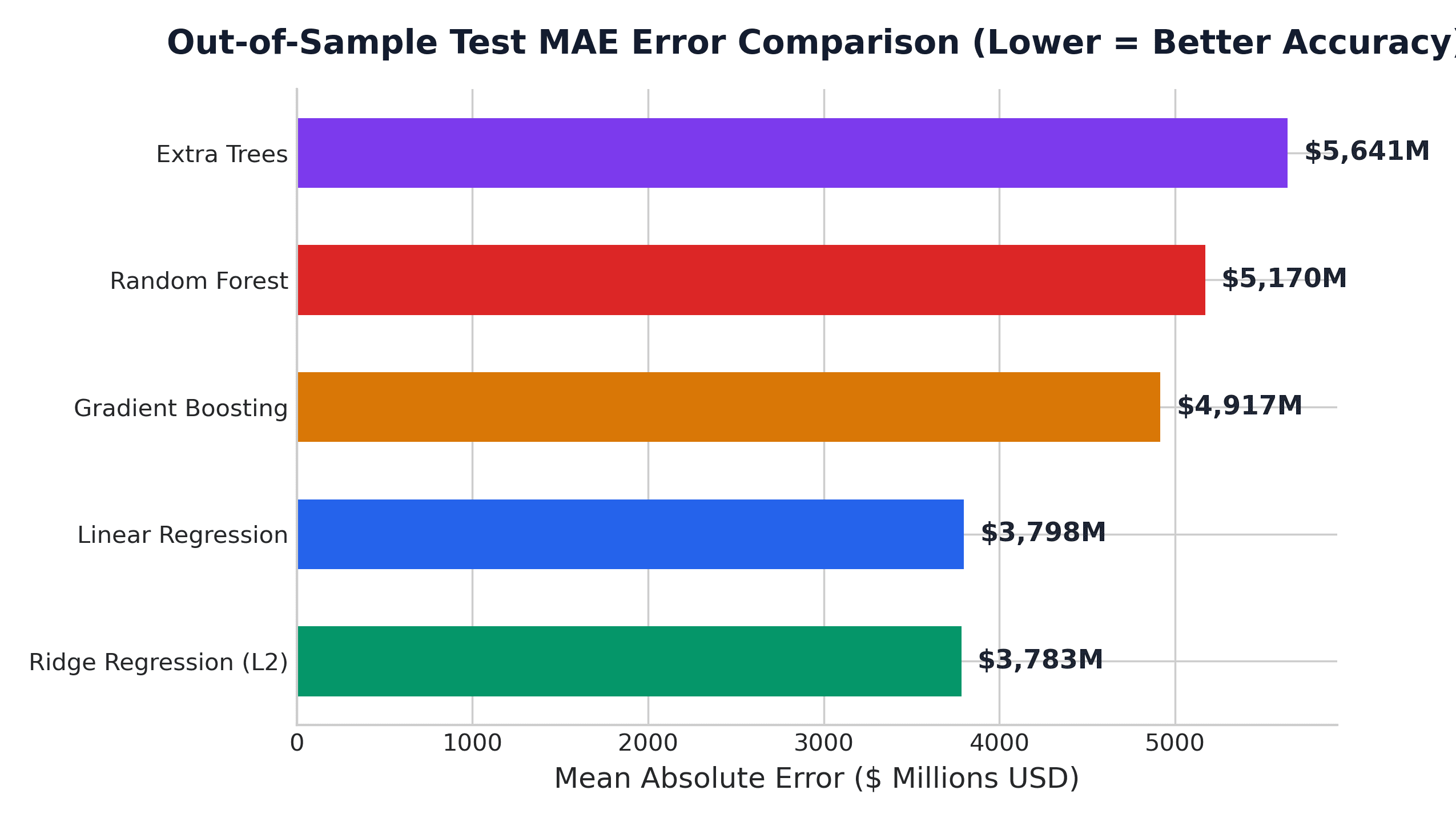
To move beyond descriptive analytics, multiple machine learning algorithms were evaluated using a chronological train-test framework that reflected real-world forecasting conditions.
The models included:
Linear Regression
Ridge Regression
Gradient Boosting
Random Forest
Extra Trees
Among these approaches, Ridge Regression produced the strongest performance on unseen data, achieving the lowest prediction error while maintaining stability during periods of high market volatility. It was therefore selected as the production model for forecasting India's monthly trade deficit.
Simulating Future Economic Scenarios
Predicting future trade values is only part of the solution.
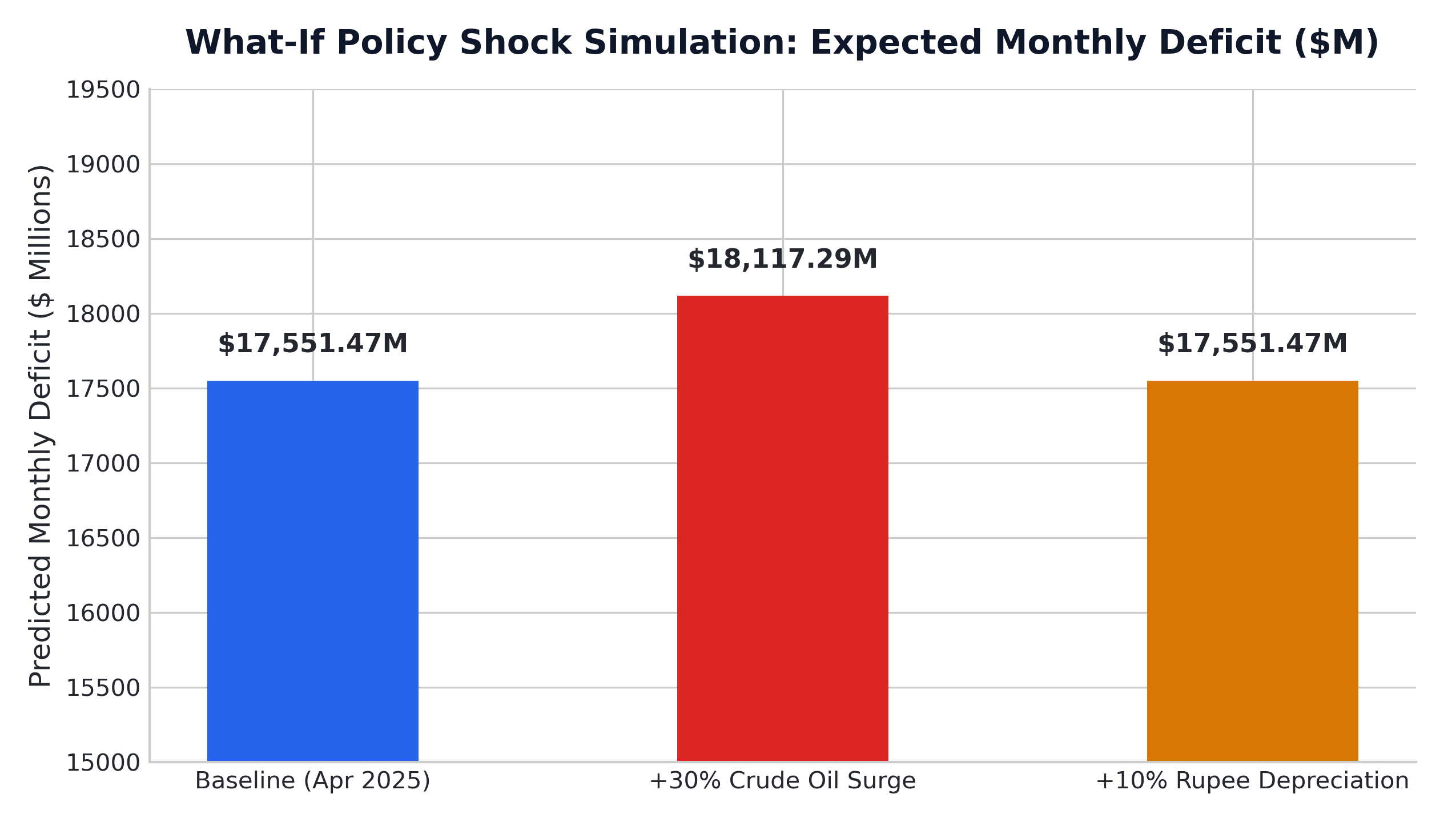
The platform also includes a policy simulation module that allows users to evaluate hypothetical economic scenarios before they occur.
For example, a simulated 30% increase in global crude oil prices projected an additional $565.83 million increase in India's monthly trade deficit.
Similarly, exchange rate depreciation scenarios demonstrated how a weaker Rupee gradually increases import costs over subsequent months due to contractual and shipping delays.
These simulations transform historical analysis into a practical decision-support system for governments, financial institutions, and businesses.
Business and Policy Impact
The India Trade Intelligence Platform is designed to support multiple stakeholders.
For policymakers, it provides early warning indicators for trade imbalances, enabling more proactive reserve management and policy formulation.
For businesses, it supports procurement planning, foreign exchange risk management, inventory optimization, and supplier diversification.
For researchers and analysts, it demonstrates how modern data science techniques can complement traditional macroeconomic analysis by converting historical observations into predictive intelligence.
Ultimately, the platform enables data-driven decision-making in an increasingly uncertain global economic environment.
Conclusion
Building the India Trade Intelligence Platform reinforced an important lesson:
Data alone does not create value. Reliable decisions come from transforming data into intelligence.
By integrating nineteen years of trade records with macroeconomic indicators and machine learning, this project demonstrates how artificial intelligence can move beyond descriptive reporting to deliver predictive and prescriptive insights.
As international trade becomes increasingly shaped by geopolitical tensions, commodity price volatility, and changing global supply chains, predictive trade intelligence will become an essential capability for governments, businesses, and financial institutions alike.
The India Trade Intelligence Platform represents a step toward that future—where economic decisions are informed not only by historical data but also by intelligent forecasts and evidence-based policy analysis.
References and Appendix
Bastourre, D., Carrera, J., Ibarlucia, J., & Sardi, M. (2012). Commodity prices in Argentina: What does move the wind? Central Bank of Argentina Working Paper.
Chen, T., & Guestrin, C. (2016). XGBoost: A scalable tree boosting system. Proceedings of the 22nd ACM SIGKDD International Conference on Knowledge Discovery and Data Mining (pp. 785–794). https://doi.org/10.1145/2939672.2939785
Directorate General of Commercial Intelligence and Statistics. (2025). Export import data bank. Ministry of Commerce and Industry, Government of India. https://tradestat.commerce.gov.in/
International Monetary Fund. (2024). World economic outlook. https://www.imf.org/en/Publications/WEO
International Monetary Fund. (2023). World Economic Outlook: Navigating Global Divergences. IMF Publications.
Ministry of Commerce and Industry, Government of India. (2024). Monthly Export-Import Foreign Trade Statistics.
Ministry of Commerce and Industry. (2025). India trade statistics and export-import data. Government of India. https://commerce.gov.in/
Reserve Bank of India. (2025). Handbook of statistics on the Indian economy. https://www.rbi.org.in/
Reserve Bank of India. (2025). Database on Indian economy. https://dbie.rbi.org.in/
Reserve Bank of India (RBI). (2023). Report on Currency and Finance: Revamping External Trade Architecture. RBI Bulletins.
World Bank. (2025). World development indicators. https://databank.worldbank.org/source/world-development-indicators
World Bank. (2025). Commodity markets: Pink sheet data. https://www.worldbank.org/en/research/commodity-markets
World Bank. (2024). Global Economic Prospects: Trade Vulnerabilities in South Asia. World Bank Group.
World Integrated Trade Solution. (2025). Tariff and trade analysis database. https://wits.worldbank.org/
World Trade Organization. (2024). World tariff profiles 2024. https://www.wto.org/

10 September 2026
Designing CertusAI: A Compliance-First Enterprise LLM Platform for Regulated Industries
As enterprise adoption pivots from raw model parameter scale to verifiable trust, CertusAI introduces a compliance-first LLM architecture engineered specifically for highly regulated industries. By integrating real-time PII redaction, deterministic policy enforcement, and cryptographically signed audit chains directly into the inference pipeline, CertusAI unlocks agentic AI productivity while ensuring total data sovereignty and statutory compliance.

10 September 2026
E-Commerce Return Intelligence: Analyzing Return Drivers and Predicting Purchase-Time Return
Addressing reverse-logistics friction and return-rate costs in fashion e-commerce, this study leverages the 1.37M-record ASOS GraphReturns dataset to evaluate product, pricing, and country-level return drivers. Using Terno AI for structured analysis alongside a deployed Logistic Regression baseline, the platform provides purchase-time risk scoring to power relative risk ranking, operational prioritization, and non-punitive intervention pilots.
10 September 2026
Global Food Loss Intelligence: Strategic Screening & Decision Framework
An executive decision-support whitepaper translating the official FAO Food Loss Index (SDG Indicator 12.3.1a) into actionable intelligence for 2021–2023. This study establishes a data-driven monitoring baseline across major commodity groups, identifying Fruits & Vegetables (3-year mean index of 109.65) as the primary priority for diagnostic follow-up while offering structured strategies for public policy, industry benchmarking, and evidence-based resource allocation.